
Anti-slip safety footwear is essential personal protective equipment (PPE) for work areas with an increased risk of slipping. Whether on wet industrial surfaces, oily workshop floors, smooth warehouse flooring or icy conditions in winter – a high-performance, slip-resistant outsole significantly reduces the risk of accidents and improves workplace safety in the long term.
Slip-resistant safety footwear is a central element of occupational health and safety – especially where smooth, wet or oily surfaces pose a serious accident risk. While general anti-slip solutions such as tapes, floor coatings or slip-resistant workplace mats help to reduce hazards from slippery floors, slip-resistant shoes tackle the problem with every step, directly at the employee. Such shoes feature specially developed sole profiles and rubber compounds that can ensure secure grip even on wet, oily or soapy surfaces, reducing the risk of trips, slips and falls in everyday work. They are indispensable in numerous working environments – from food production, construction sites and the offshoresector, through logisticsand production halls to catering and care settings – and complement fixed anti-slip systems with mobile, personal protection.
Safety boots for winter, ice and freezer stores
Type: Winter safety boot, Protection class S3 (in accordance with EN ISO 20345)
Area of use: Commercial, industrial and weather-exposed working environments
Made in Italy
Available shoe sizes: 36–50
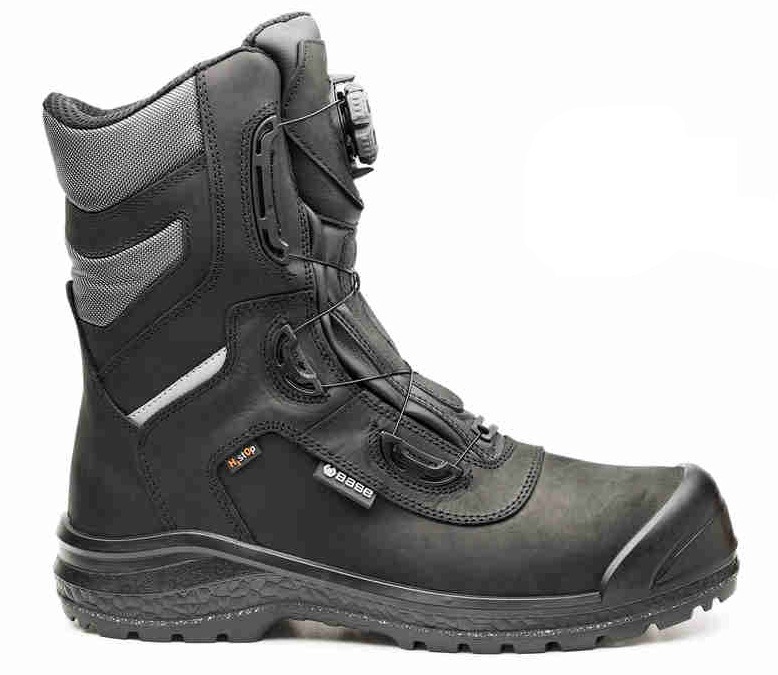
🛡️ Protection & performance of the winter safety boots
This rugged work boot combines a wide range of safety features to protect the foot in demanding applications:
- Mechanical protection: Toe cap and penetration-resistant midsole reduce the risk of injury from falling or sharp-edged objects.
- Waterproof & weather-resistant: H2-Stop membrane and waxed upper leather keep out wet and moisture.
- Cold and heat insulation: Special insulating materials protect against low temperatures (down to around -17 °C) and also provide resistance to heat.
- Hydrocarbon and chemical resistance: Materials selected for resistance to certain oils, greases and chemical exposure.
👣 Slip resistance & stability
- SRC-rated slip resistance: The sole meets the SRC rating, which means it provides good grip both on wet ceramic tiles with detergent solution and on oily steel surfaces. This classification corresponds to the highest standard for slip-resistant outsoles in EN ISO 20345.
- The tread pattern and the material compound of the outsole improve grip on various floor coverings, reducing the risk of slipping.
🦵 Comfort & ergonomics
- Shock absorption: Cushioning in the heel area reduces strain when walking and standing for long periods.
- Breathable lining: Supports moisture management and increases wearing comfort.
- Metal-free construction: Suitable for workplaces with metal detectors or special requirements.
📊 Standards & certification
- EN ISO 20345:2011 S3 SRC – safety boot with toe cap, penetration resistance, water resistance, cold and heat insulation and slip-resistant sole performance.
Application profile of the safety boot for winter and icy conditions
Ideal for:
- Indoor and outdoor construction and installation work
- Warehouse and logistics areas with wet, oily or slippery floors, as well as freezer areas
- Winter work, e.g. also for shovelling or clearing snow
Ladder safety shoe with ladder grip integrated into the sole
Italian-made high-cut safety shoe with reinforced sole technology and a special design for working on ladders (e.g. fixed access ladders, scaffold ladders, leaning ladders). Use this ladder safety shoe together with our retrofit R13 ladder rung coversto increase sure-footedness on ladders even further.
Available shoe sizes: 35–48
Purpose & area of use
A rugged, ankle-high ladder safety shoedeveloped for use in demanding working environments, especially where
employees regularly climb ladders or work on scaffolding. The design optimises stability, protection and grip in situations with an increased risk of falls and slips.
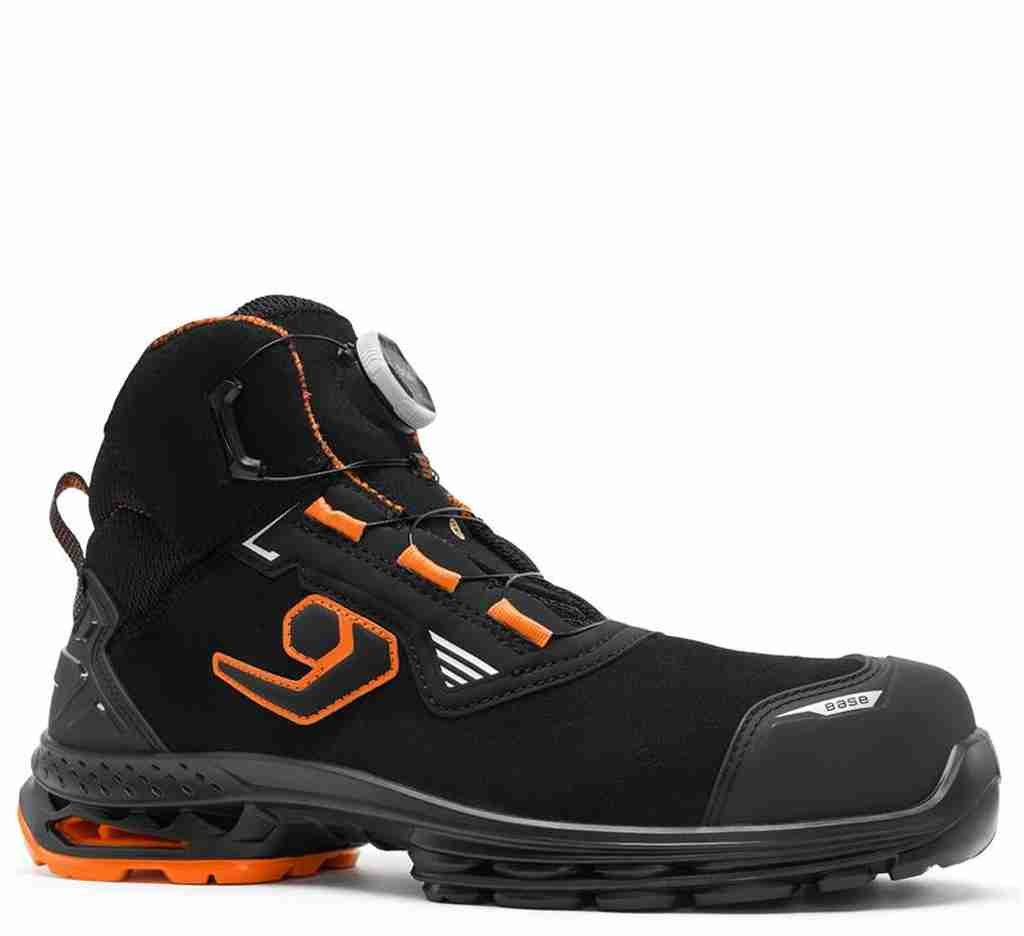
Protective features of the safety shoe for ladders and scaffolding
Mechanical protection:
- Safety class S3 (in accordance with EN ISO 20345) with toe cap and penetration-resistant midsole – reduces the risk of injury from nails etc.
Special ladder safety
- The special outsole of the anti-slip ladder safety shoe features a specially developed tread with optimised grip for ladder rungs (“Ladder Grip”) and increased friction, providing secure footing when climbing up and down fixed, scaffold or leaning ladders. This tread design ensures continuous grip on narrow rungs, minimising the risk of slipping off.
Slip resistance & sure-footedness
- Non-slip outsole with a broad grip spectrum, designed for various surfaces (wet, smooth, oily).
- The combination of tread geometry and material improves standing and starting stability.
Upper material & weather resistance
- Water-repellent, flexible upper (e.g. leather / textile combination) protects against moisture, cold and adverse weather conditions.
Comfort & ergonomics
- The ankle-high design supports the ankle, stabilises the foot on inclined steps and reduces fatigue during longer periods of use.
- Breathable lining and an anatomically shaped insole improve wearing comfort throughout entire shifts.
Standards & certifications
- EN ISO 20345:2011 S3 – toe cap, penetration resistance, slip resistance.
- Slip resistance specification (e.g. SRC or higher) – an important requirement for safe standing and climbing conditions.
Key benefits for ladder work
| Aspect | Effect for ladder work |
|---|---|
| **Special sole design (“Ladder Grip”)** | Increases grip on ladder rungs and reduces the risk of slipping |
| Ankle stability thanks to high-cut shaft | Supports and stabilises the ankle joint during vertical movements |
| Slip-resistant tread sole | Improves grip on smooth, damp and oily surfaces |
| Comfort and cushioning | Minimises fatigue when climbing up and down frequently |
Conclusion
This high-cut safety shoe is aimed at users who, in addition to standard occupational safety, place particular emphasis on safety when climbing ladders and working at height. Suitable for construction, installation, servicing and maintenance work where secure footing and stability are crucial.
Overview table: slip-resistant work shoes for special applications
| Shoe type | Typical protection classes | Common additional features (neutral) | Typical areas of use |
|---|---|---|---|
| Low-cut safety shoe | S1P, S2, S3 | SR/SRC, ESD, penetration-resistant, metal-free | Industry, logistics, installation |
| Mid-cut safety shoe | S1P, S3 | SR/SRC, ESD, ankle support | Trades, mechanical engineering |
| High-cut safety boot | S3 | SR/SRC, water-repellent, stable | Construction, outdoor installation |
| Winter/cold-insulated boots | S3 CI | SR/SRC, CI, water-repellent | Outdoor work in winter |
| Heat-resistant safety shoes | S3 HRO | SR/SRC, HRO | Asphalt work, foundries, welding |
| ESD safety shoes | S1P ESD, S3 ESD | SR/SRC, ESD | Electronics manufacturing, automotive |
| Metal-free safety shoes | S1P, S3 | SR/SRC, composite | Security checks, food |
| Safety sandals (ventilated) | S1P SR | SR/SRC | Installation, logistics in hot conditions |
| Safety slip-ons | S1P SR, S2 SR | SR/SRC, lightweight | Catering, care, food |
| Slip-resistant work trainers | S1P SR | SR/SRC, lightweight, breathable | Service, indoor areas |
| Slip-resistant clogs & hygiene shoes | SB / SR | SR/SRC, hygienic, wipe-clean | Medical, cleanroom, food |
Slip resistance
Modern safety shoes with anti-slip technology generally meet the requirements of EN ISO 20345 and have tested slip resistance ratings such as SRC or SR ((“Slip Resistance”). Specially developed tread patterns and abrasion-resistant rubber compounds ensure optimum grip on ceramic, steel or concrete surfaces. Combined with toe caps, penetration-resistant midsoles and shock-absorbing elements, these work shoes offer comprehensive protection together with a high level of wearing comfort.
| Marking | Test condition | Meaning |
|---|---|---|
| SRA | Ceramic tile + cleaning solution (sodium lauryl sulphate) | Protection against slipping on wet, soapy floors |
| SRB | Steel plate + glycerine | Protection against slipping on oily, smooth surfaces |
| SRC | Combination of SRA + SRB | Meets both test conditions |
SRC stands for the maximum tested slip resistance under the old marking (EN ISO 20345:2011).
What SRC means in practice
A safety shoe with SRC certification offers:
- Secure grip on wet floors
- Improved grip on oily or greasy surfaces
- reduced accident risk in industry, trades, logistics or catering
Important note on the current standard
With the update of the standard to EN ISO 20345:2022 the marking was changed:
- Instead of SRA/SRB/SRC, there is now the general marking SR (“Slip Resistance”)
- The test method has been adapted, but the goal remains the same: tested slip resistance.
In short:
SRC means: tested slip resistance on wet AND oily floors – the highest classification under the previous standard.
Anti-slip safety footwear is particularly suitable for:
- Construction and installation work
- Industrial and production facilities
- Warehouse and logistics areas
- Food processing and catering
- Trades and facility management
Thanks to ergonomic fits, breathable materials and modern cushioning systems, they help prevent fatigue even during long shifts. Anyone who values tested slip resistance, stability and reliable foot protection relies on certified anti-slip safety shoes as an essential part of workplace safety.
Frequently asked questions about anti-slip safety footwear
Do non-slip safety shoes replace a slip-resistant floor?
No. Under occupational health and safety rules, technical measures on the floor take priority. Safety shoes are personal protective equipment and complement slip-resistant floors, stairs and walkways.
What does the SRC marking mean?
Under the older edition of EN ISO 20345, SRC stands for tested slip resistance on two test surfaces. With the 2022 edition, the marking was changed to SR. You will find details in the section on the standard above.
Which shoe is suitable for working on ladders and scaffolding?
A shoe with a ladder tread profile in the sole and a high shaft provides better grip on rungs and steps. In addition, the rungs themselves can be retrofitted with slip-resistant covers.
Related solutions and industries
- slip-resistant ladder rung covers
- Anti-slip solutions for construction sites
- Slip protection in cold stores and the food industry
- Securing stairs and paths in winter
Protection classes for safety shoes in accordance with EN ISO 20345
S3 stands for a safety shoe with toe protection, water-repellent upper, penetration-resistant midsole and cleated outsole – ideal for demanding working conditions.
| Class | Main difference |
|---|---|
| S1 | No water resistance, no penetration resistance |
| S2 | With water resistance, but without penetration resistance |
| S3 | With water resistance + penetration resistance + cleated sole |
| S4/S5 | For rubber/polymer boots |
Important note on the current standard (EN ISO 20345:2022): in the new standard, S3 has in some cases been supplemented by S3S or S3L, depending on the type of penetration resistance (metallic or non-metallic). The basic protection philosophy, however, remains identical.